

December holds a unique place in aviation history. On December 17, 1903, Wilbur and Orville Wright achieved the first successful powered, controlled airplane flight at Kill Devil Hills, North Carolina. The event marked a turning point in transportation and engineering, establishing the foundations of modern aviation. More than a century later, aviation continues to influence the design and function of professional instruments, including pilot watches built for precision, legibility, and reliability. Among them, the Rolex Air-King stands as a contemporary example of a timing instrument shaped by aviation heritage.
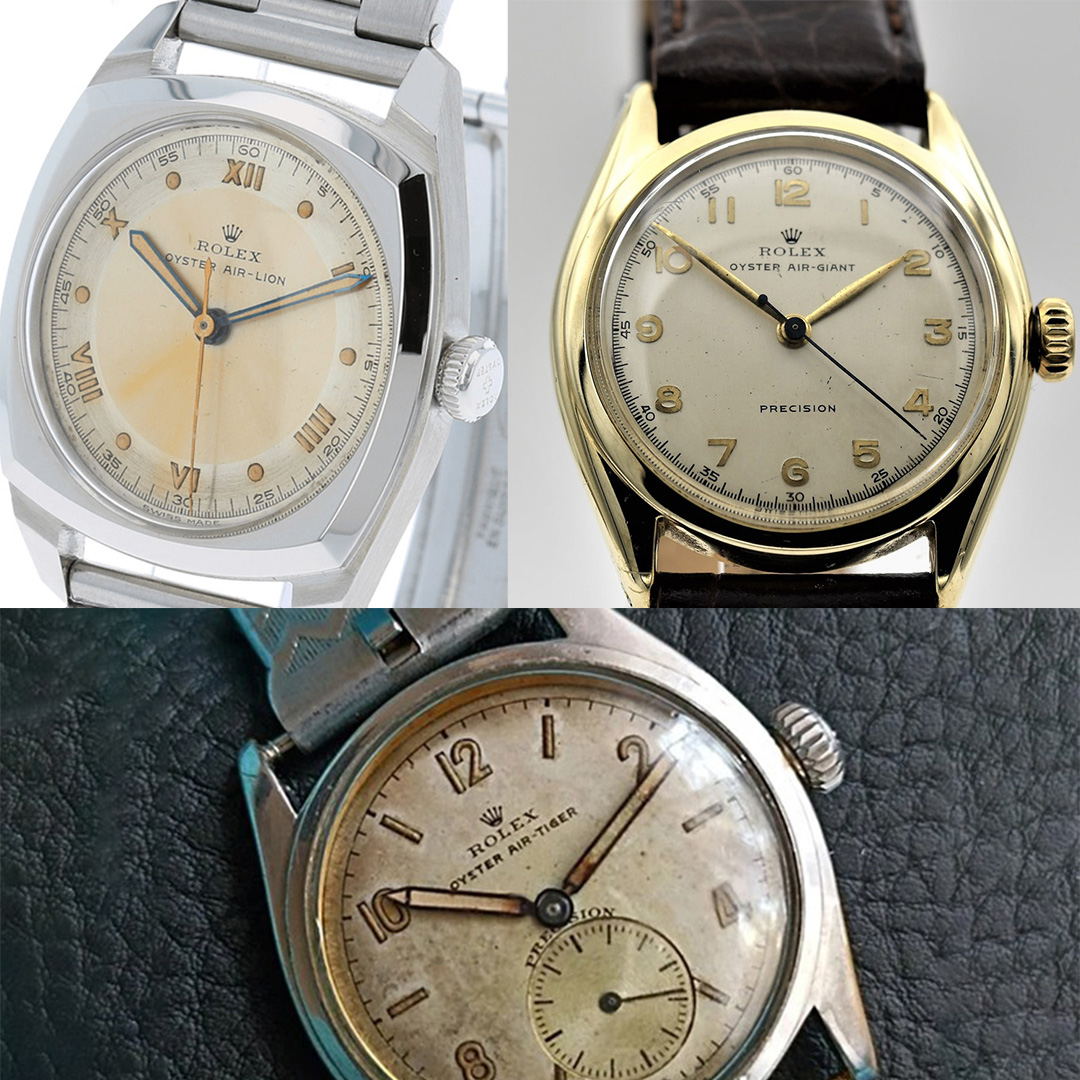
Rolex’s connection to flight predates many of its better-known professional models. During the early 20th century, aviation placed new demands on timekeeping, requiring watches that could withstand vibration, pressure changes, and temperature variation while remaining easy to read at a glance. Rolex responded by developing watches for pilots and navigators, emphasizing durability and accuracy. The Air-King name emerged in the 1940s as part of a group of aviation-inspired models known collectively as Rolex’s “Air” series, which also included the Air-Lion, Air-Tiger, and Air-Giant. These watches were produced in the years following World War II and shared a focus on clarity and reliability rather than complex complications. While those early references were simple in design, the Air-King distinguished itself by remaining in continuous production after the others were discontinued, becoming the sole surviving name from Rolex’s original Air series and a lasting marker of the brand’s long-standing relationship with aviation.
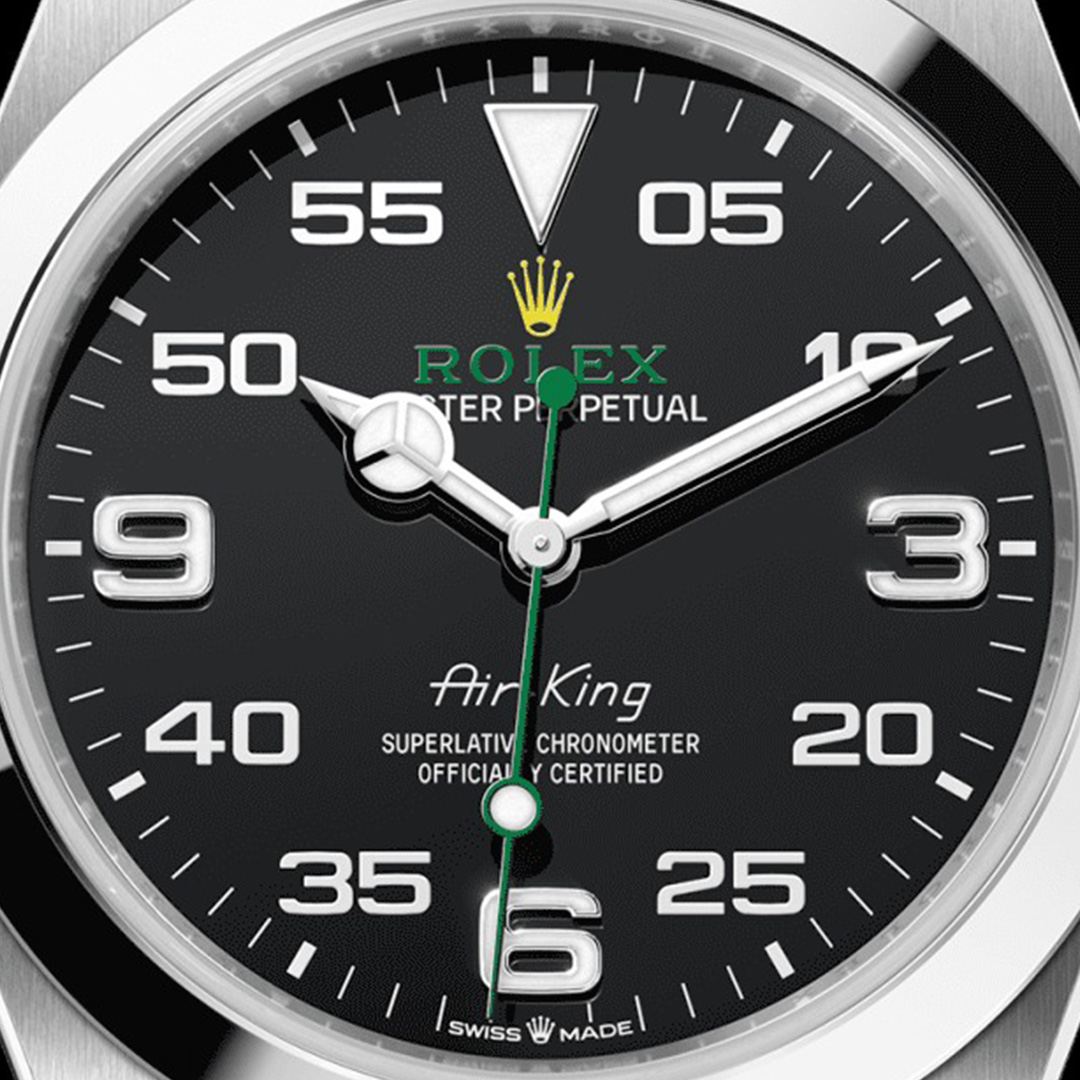
The modern Rolex Air-King continues that lineage as a pilot-oriented timing instrument rather than a retro reissue. Its purpose is grounded in clarity and performance, reflecting the practical needs of aviation professionals rather than decorative nostalgia. The dial layout prioritizes immediate legibility, with large Arabic numerals at 3, 6, and 9, a prominent minute scale, and a high-contrast black background. This configuration supports rapid time reading, a critical requirement in aviation environments where visual information must be processed quickly.
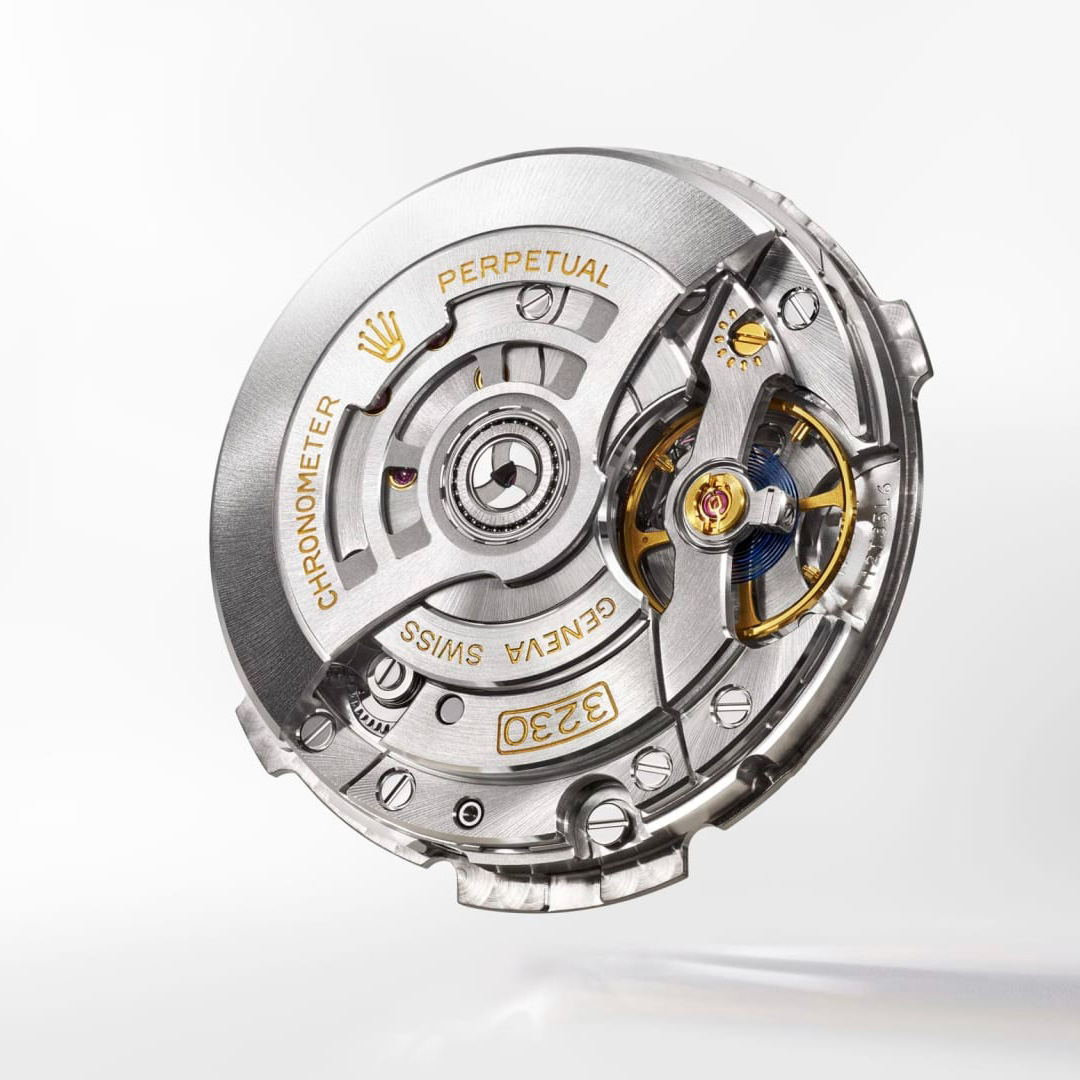
At the core of the current Air-King is Rolex’s in-house caliber 3230, an automatic movement designed for precision and durability. The movement operates at 28,800 vibrations per hour and offers a power reserve of approximately 70 hours. It incorporates Rolex’s Chronergy escapement for improved efficiency, along with a Parachrom hairspring that enhances resistance to shocks and temperature fluctuations. The Air-King is also equipped with anti-magnetic shielding, a feature particularly relevant in cockpit environments where electronic instruments and magnetic fields are present. Like all modern Rolex movements, the caliber 3230 is certified as a Superlative Chronometer, tested to standards that exceed conventional chronometer requirements.
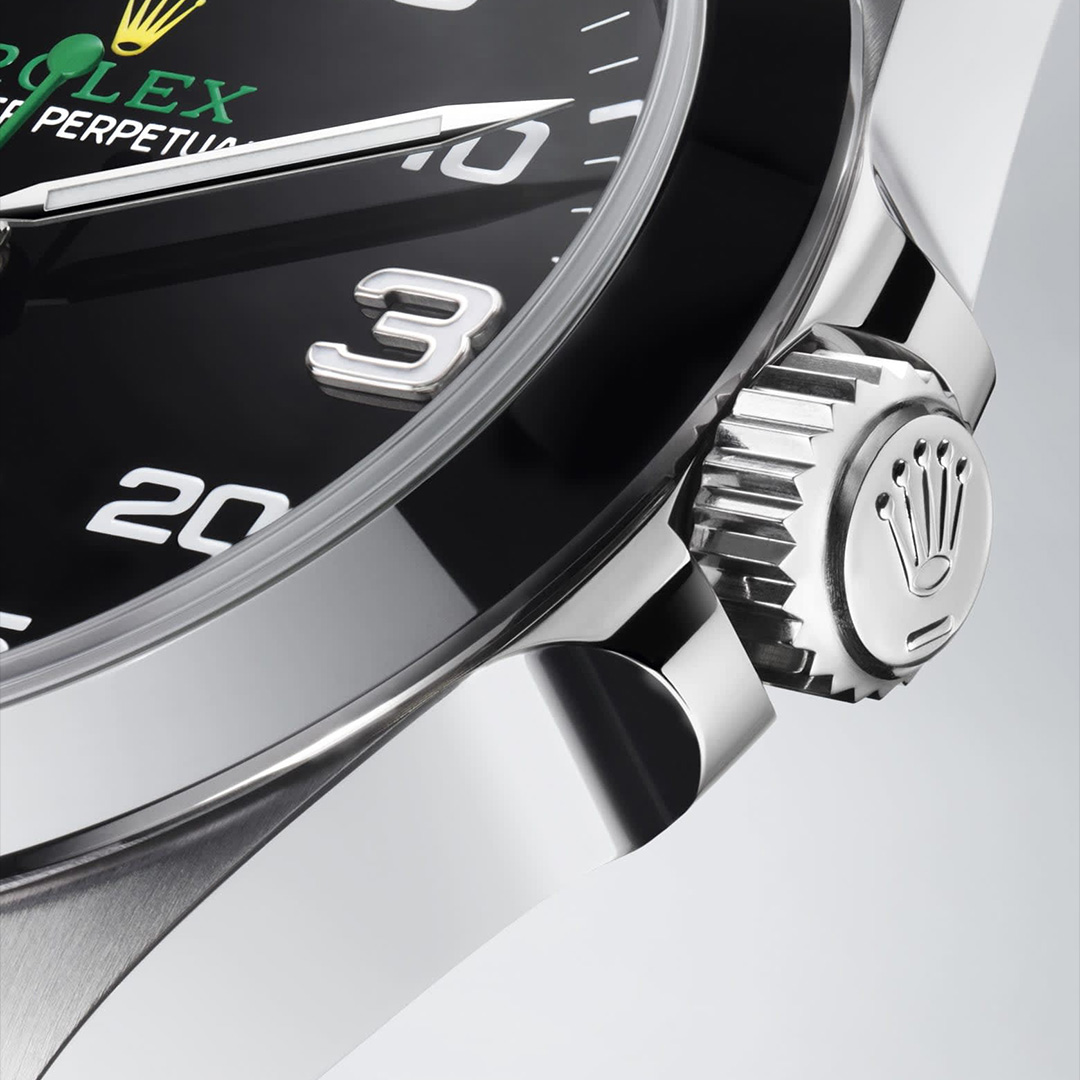
The case of the Air-King measures 40 mm in diameter and is constructed from Oystersteel, Rolex’s proprietary stainless steel alloy known for corrosion resistance and structural strength. The addition of crown guards, introduced in the current generation, improves protection and aligns the watch with Rolex’s broader professional lineup. Water resistance is rated at 100 meters, providing security for everyday wear and exposure without positioning the watch as a specialized dive instrument. A scratch-resistant sapphire crystal protects the dial and contributes to long-term clarity.
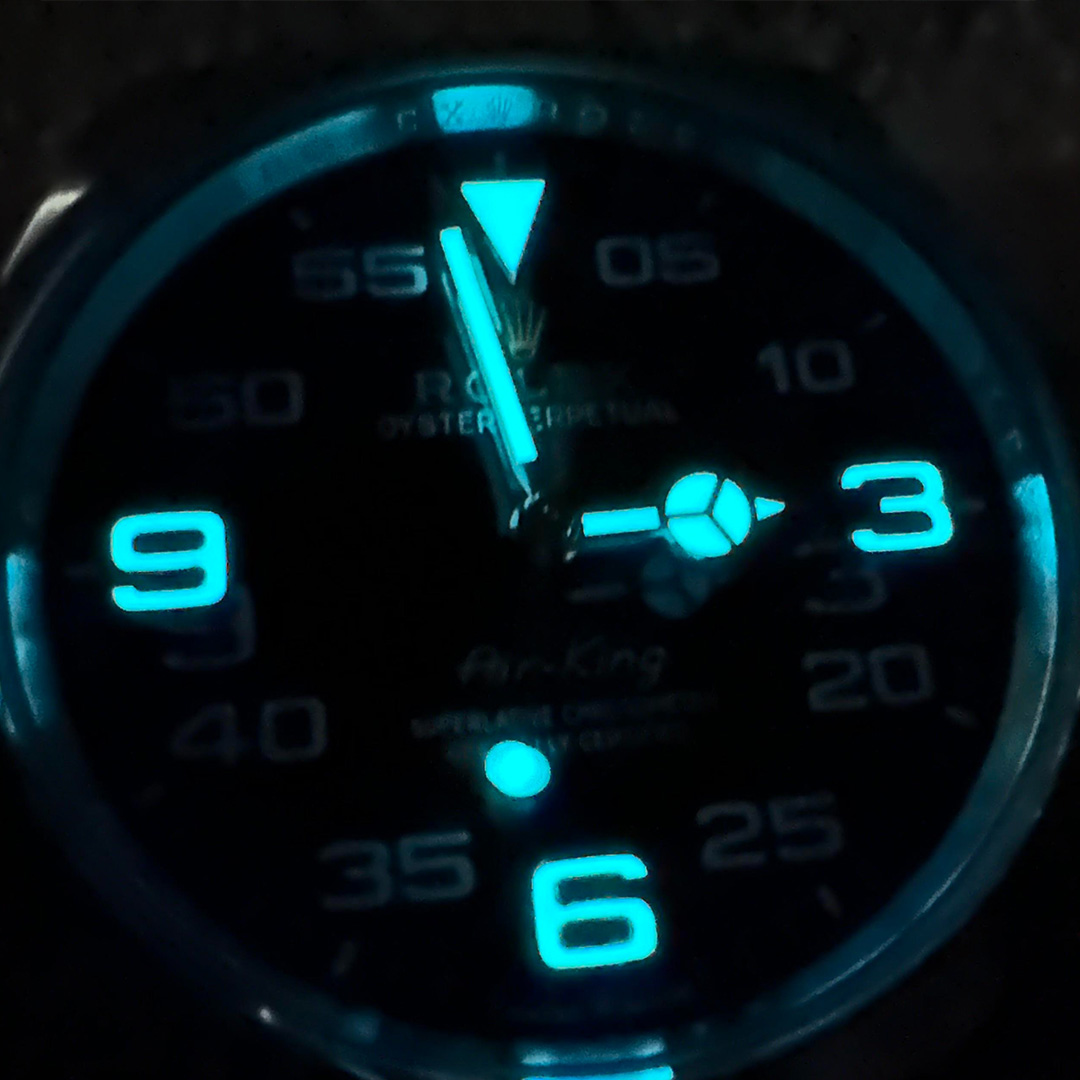
Design choices on the Air-King reflect a balance between historical reference and modern execution. The dial incorporates both hour and minute scales, emphasizing precision over minimalism. The green seconds hand and Rolex crown echo the brand’s signature colors without overpowering the functional layout. Chromalight lume on the hands and markers ensures visibility in low-light conditions, supporting the watch’s role as a legible tool rather than a decorative accessory.
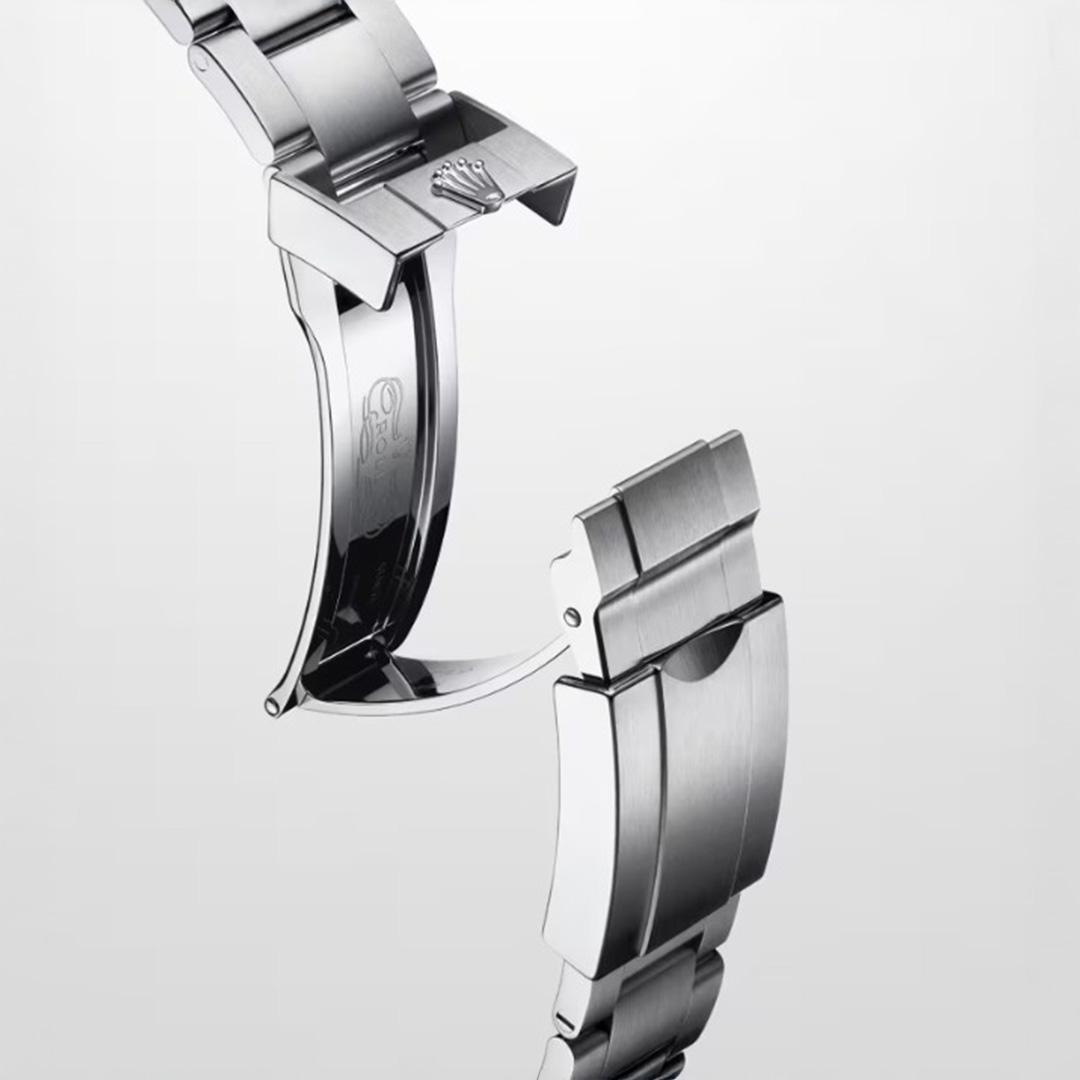
From a wearability perspective, the Air-King’s proportions and bracelet construction support extended daily use. The Oyster bracelet features solid links and a folding Oysterclasp with an Easylink comfort extension, allowing small adjustments without tools. This attention to fit and stability reflects the same engineering mindset that guided early aviation instrument design.
As December marks the anniversary of humanity’s first powered flight, the Rolex Air-King serves as a reminder of how aviation has shaped modern timekeeping. It is not a commemorative piece, nor a nostalgic tribute, but a functional watch informed by the demands of flight. In that sense, it reflects aviation’s enduring influence on precision engineering, from the sands of Kill Devil Hills to the wrists of modern professionals.
Join The Party

COPYRIGHT © 2026 BAILEY'S FINE JEWELRY. ALL RIGHTS RESERVED. PRIVACY POLICY
