

Norqain has just released the Wild ONE Skeleton Chronograph, expanding the platform into more complex territory. There are plenty of watches that look like sports watches, but fewer that are actually engineered like one. That’s the lane Norqain has been building into over the past few years, and this new model feels like a continuation of that idea rather than a reset. It takes what already made the Wild ONE platform different—its lightweight construction, shock resistance, and unconventional materials—and adds one of the more complex complications you can put into a watch.
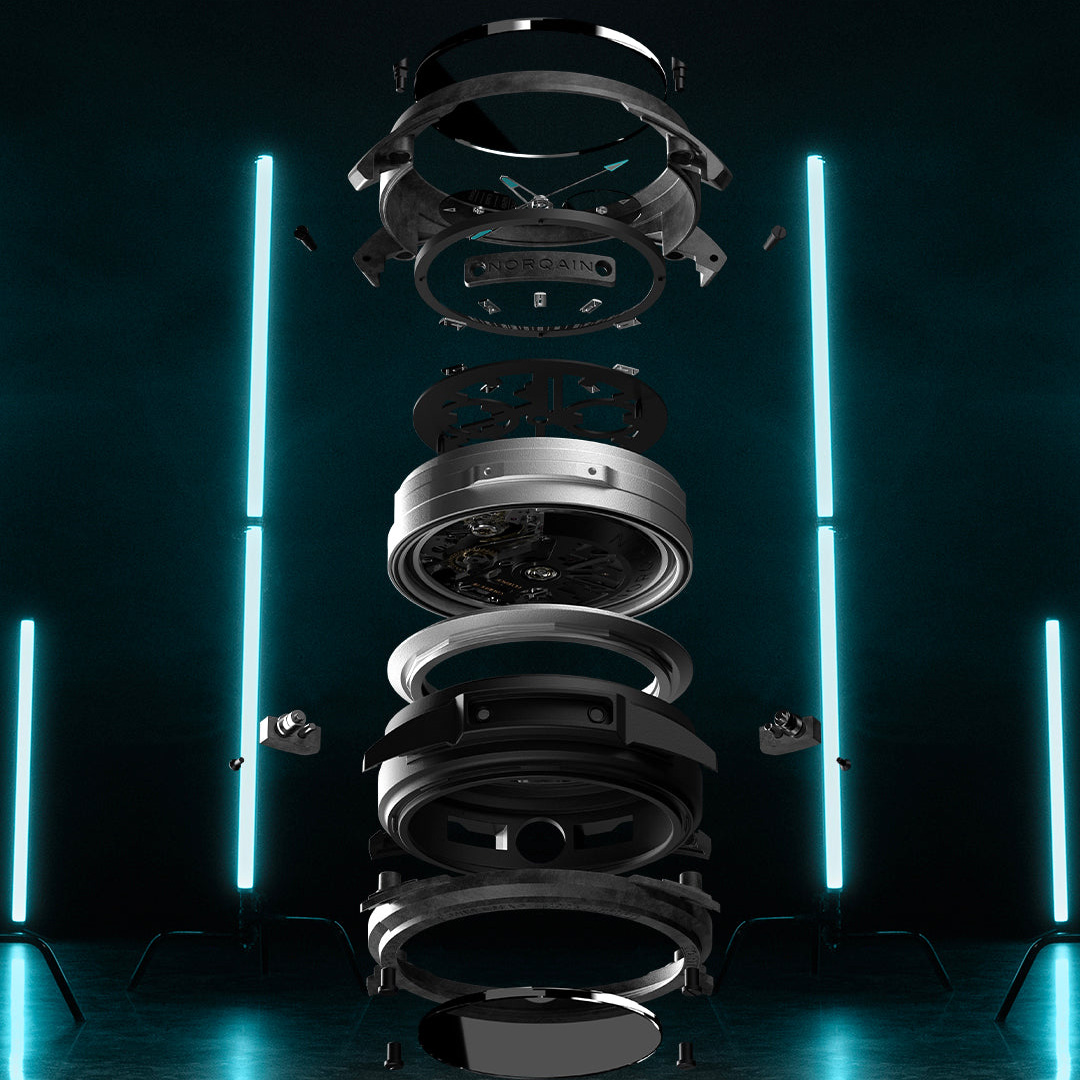
That matters, because chronographs are usually where sport-focused designs start to fall apart. More components typically mean more weight and more vulnerability. Earlier Wild ONE models, whether it was the original three-hand version or the later skeleton pieces, focused on durability first. A 25-part case construction, a rubber shock-absorbing structure, and a titanium container holding the movement were all designed to isolate and protect the mechanics inside. The result was a watch capable of handling up to 5000g of shock while still maintaining 200 meters of water resistance.
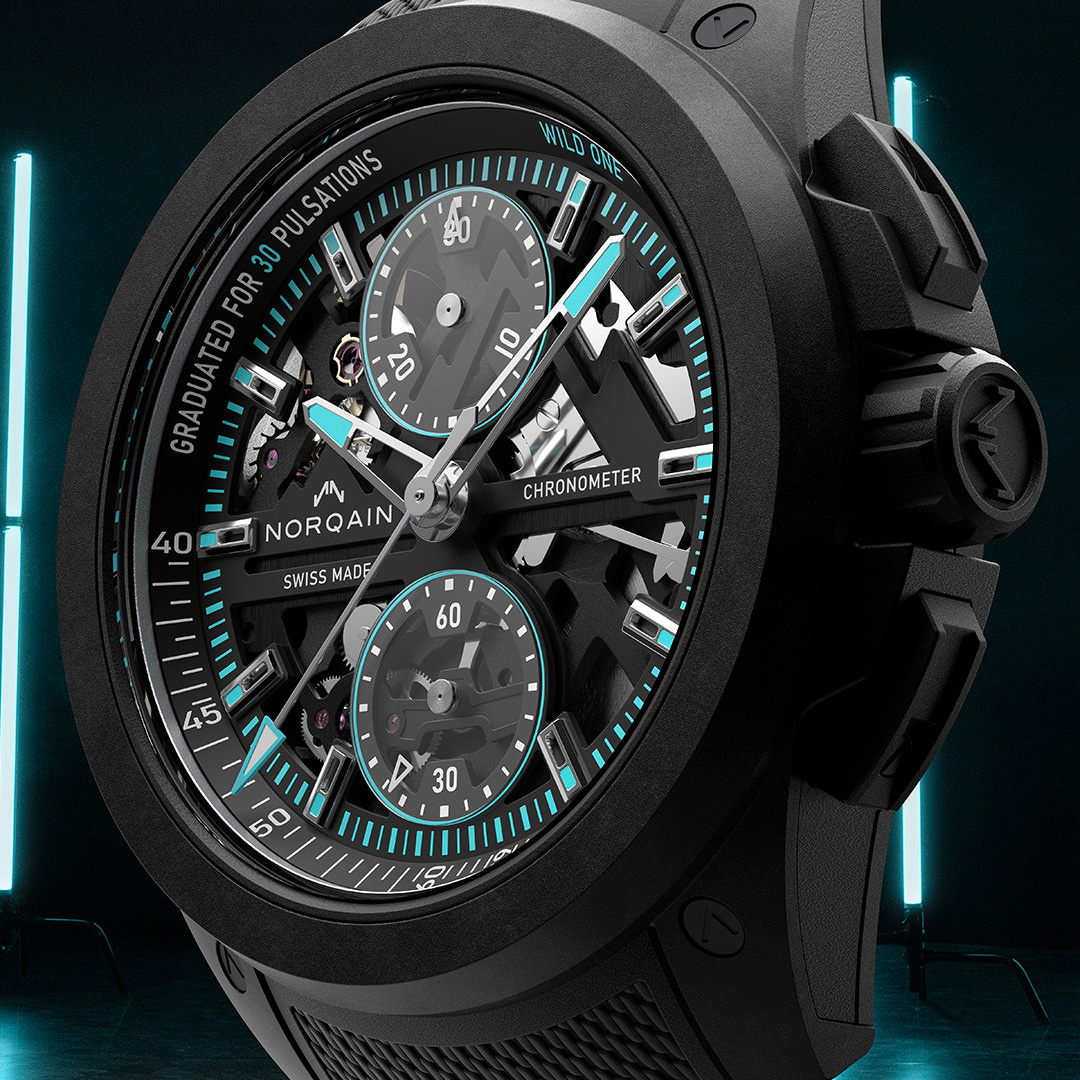
This new release keeps that same foundation intact, but now builds around it with the addition of the 8K manufacture flyback chronograph. It’s the same movement used in the Independence Skeleton Chrono, which already leaned more traditional in its case construction. Bringing that movement into the Wild ONE platform is really the point of this watch. It’s less about adding a chronograph, and more about proving that the platform can handle it without losing what made it interesting in the first place.
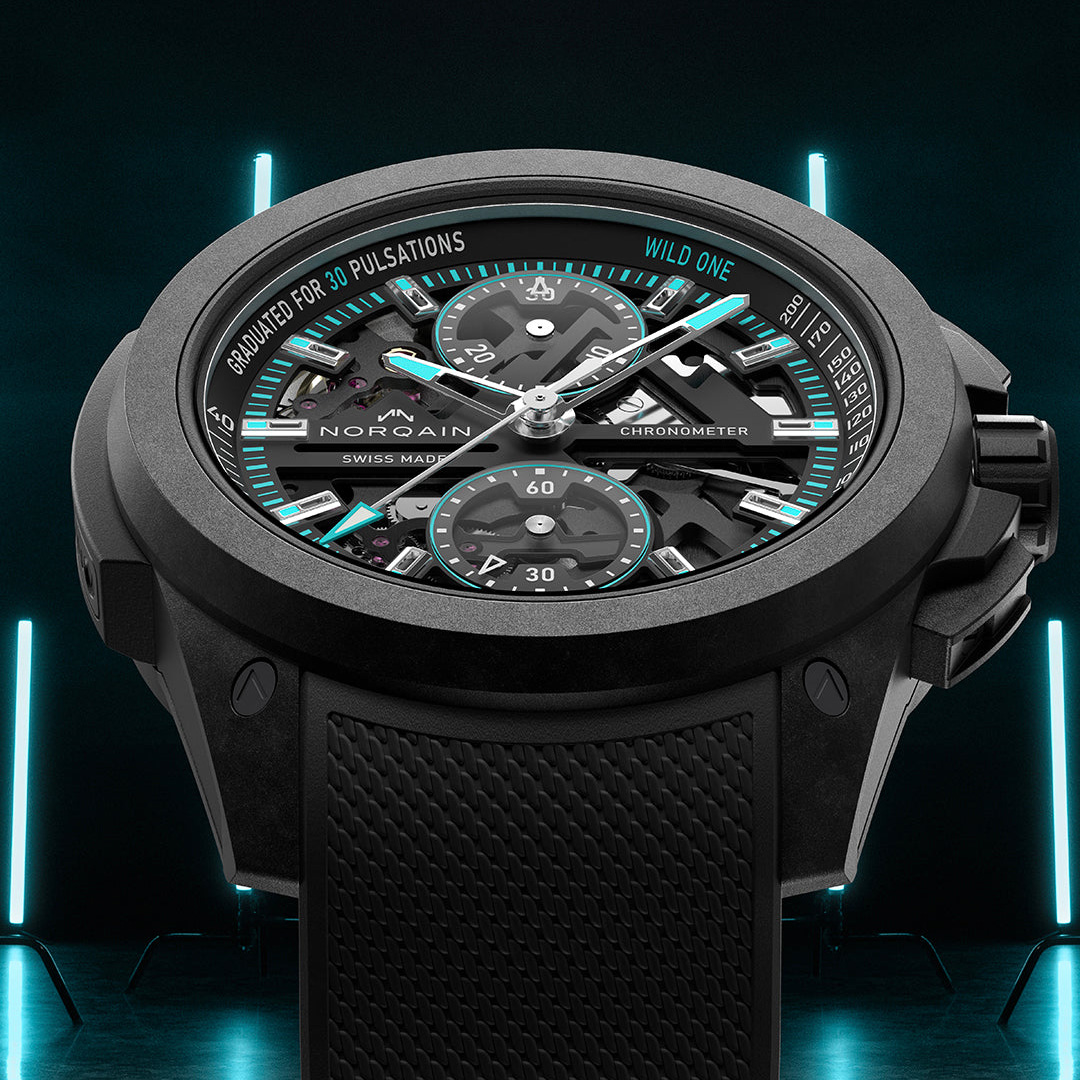
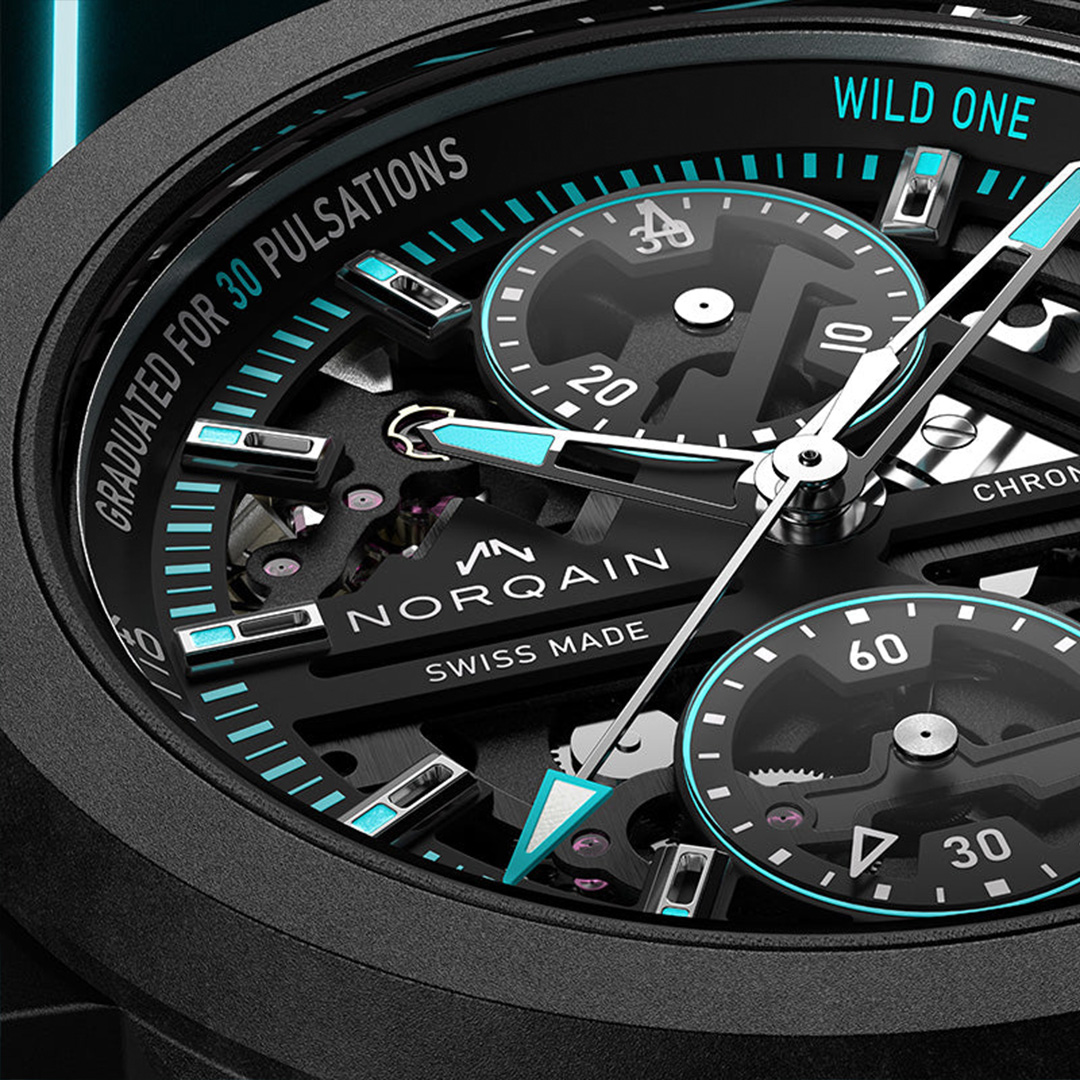
Visually, the dial reflects that same balance. Skeleton watches can easily go too far, especially when you add chronograph registers into the mix. Instead of stacking subdials on top of an already busy layout, Norqain uses floating transparent discs. You still get full chronograph functionality, but with less visual weight. The movement remains visible, but the watch stays readable. It feels more structured than expressive, which fits the overall direction.
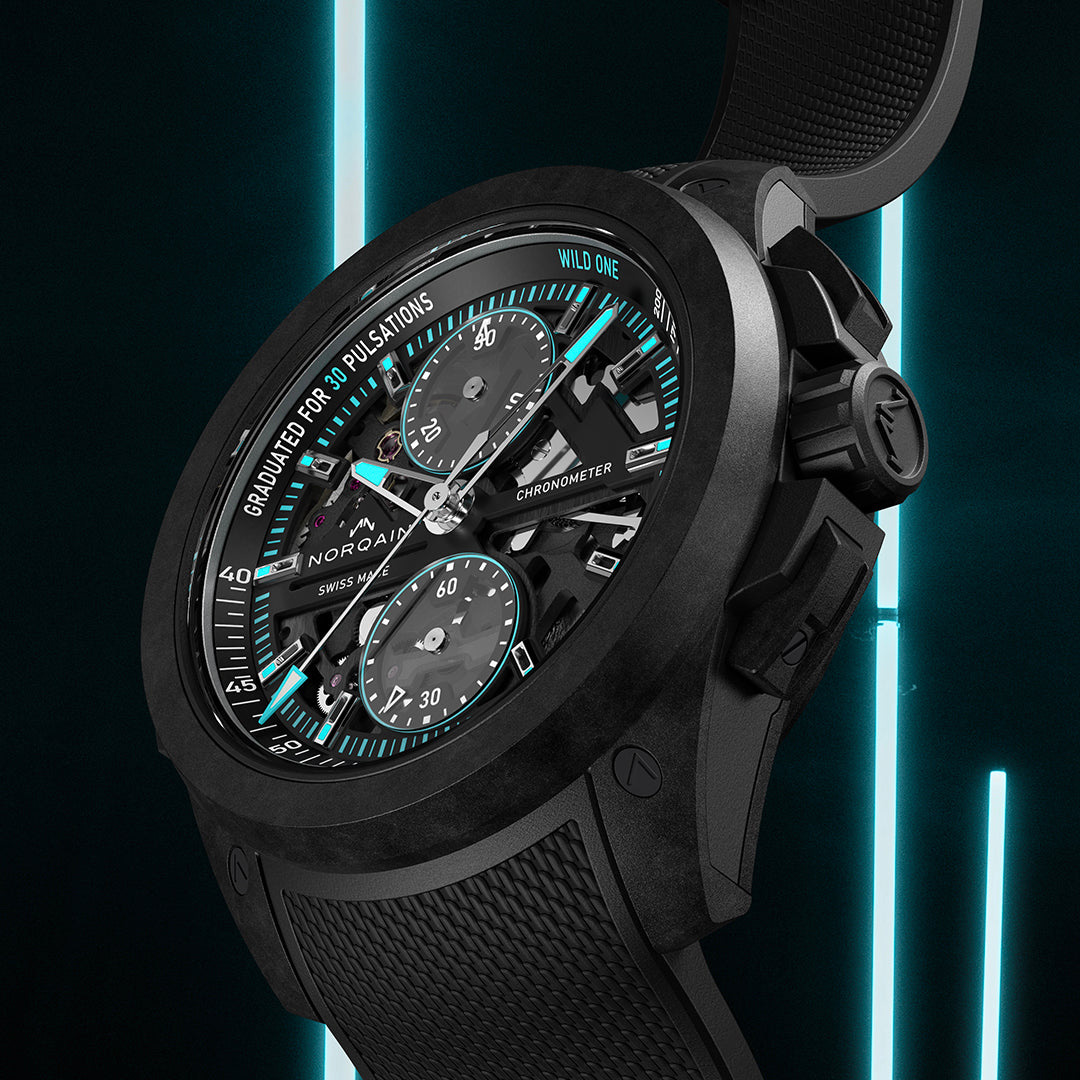
The black and turquoise version leans into that structure. The color is noticeable, but it’s not doing the heavy lifting. Against the darker NORTEQ case, it highlights the layered construction, the outer cage, the shock-absorbing core, and the open dial sitting above the movement. That case material is still a big part of the story. NORTEQ, a carbon composite developed with input from Jean-Claude Biver, is significantly lighter than steel and even titanium, while still being built for impact.
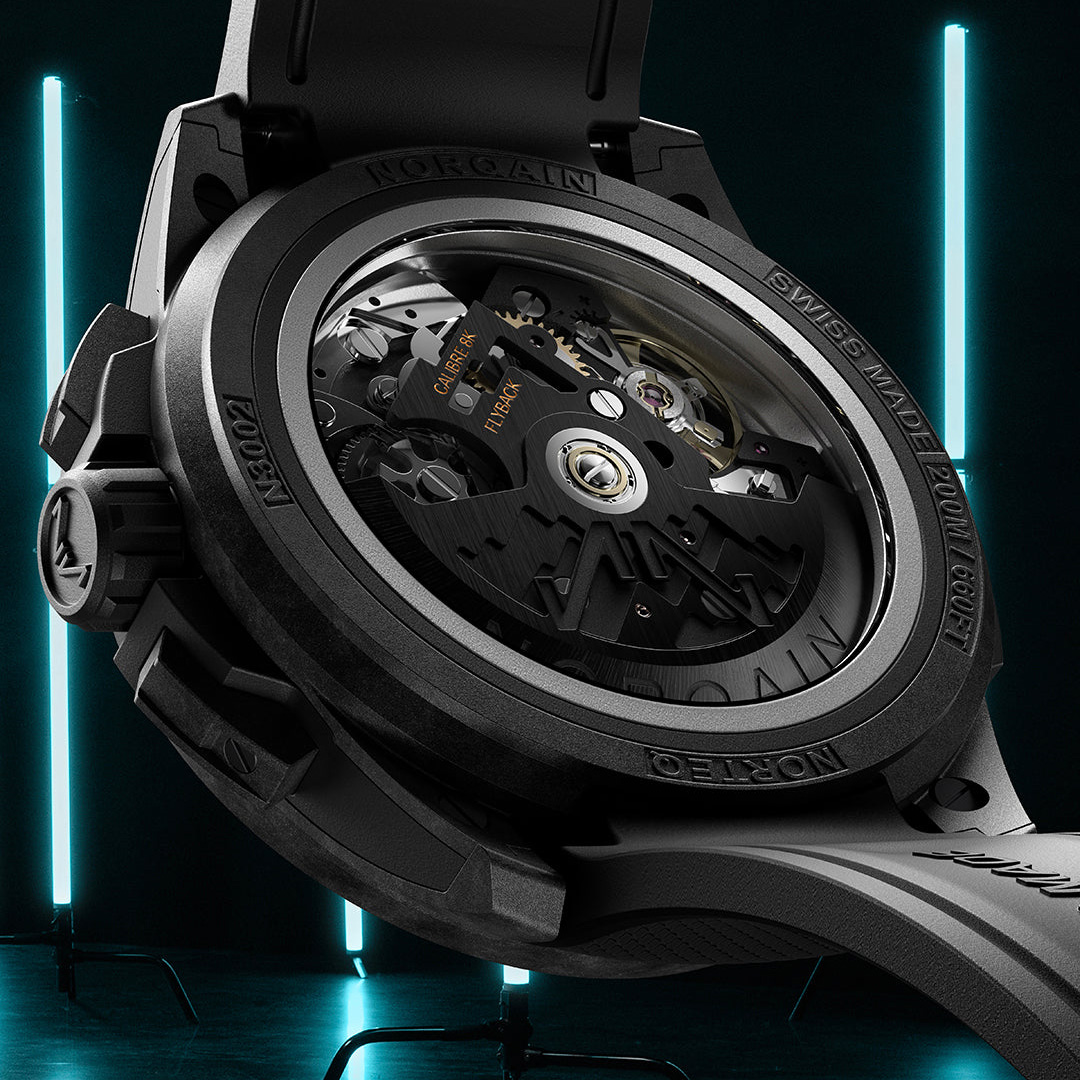
From a specs standpoint, everything lines up with what you’d expect, but the combination is what stands out. You’ve got a 42mm case, 13.6mm thickness, 62 hours of power reserve, chronometer certification, and 200 meters of water resistance, all wrapped around a flyback chronograph that’s designed to be used, not protected. Even smaller details like the pulsometer scale add another layer. It’s not something most people will use often, but it reinforces the idea that this watch is built around function, not just appearance.
The original models proved that Norqain could build a lightweight, shock-resistant mechanical watch that didn’t follow the usual design language. The skeleton versions pushed the visual side further. This new chronograph does something different. It tests whether that same concept can hold up with more mechanical complexity.
That’s really where this watch lands. It’s not trying to replace a traditional chronograph. It’s a watch that leans equally on engineering, materials, and design, and pushes the Wild ONE platform further than it’s gone before.
Join The Party

COPYRIGHT © 2026 BAILEY'S FINE JEWELRY. ALL RIGHTS RESERVED. PRIVACY POLICY
